HMA Tennis Blog
Scopri le ultime novità dal nostro magazzino, tieniti informato con le schede prodotti e partecipa alla conversazione sul mondo del tennis.
New Mantis Tour Poly 1.27 string August 23, 2016 02:47
Despite it being summer, we are still working for you...
We've received new strings, or rather, a new gauge and new colours of a super string like the Mantis Tour Poly.
In addition to the classic red 1.22 mm gauge, Mantis has also produced the 1.27 mm gauge, also in red, but adding black and sky blue as well.

Below, as always, you can find the updated test by engineer Gabriele Medri of pro-t-one:
Happy tennis to everyone


Polyvalent Still In Black String Test June 13, 2016 05:57
Today we present the latest from STILLinBLACK, the STILLinBlack Polyvalent Square, a medium-stiff, square-shaped competition string available in 1.25 mm gauge and in 12 and 200 meter lengths.
Below is the test by Eng. Gabriele Medri:
The STILL IN BLACK POLYVALENT is a tough, competitive, and good quality string. It is a medium-high stiffness string with values always greater than 1.00kg/mm, demonstrating a competitive filament intended for high 4th, 3rd, and 2nd category players. The power value is decent, but the characteristics that particularly shine are control, spin grip, and stability, which ensure more than satisfactory performance and dynamic durability. The expected tension loss after the first hours of play is quite limited and very respectable compared to what is usually observed with strings of similar rank.
The peak resilience value is high, guaranteeing a fast and reactive ball exit that provides a good response in terms of play, despite not being an "elastic" and resilient string. The general comfort, given by the combination of static and dynamic stiffness, returns a medium-low value that suggests use at medium-low tensions between 19 and 23kg. The STILL IN BLACK POLYVALENT is a co-polyester string to be considered by all those looking for a substantial, good quality solution, oriented towards control and spin, and capable of excelling in strong and powerful shots. Its use in hybrid setups with multifilament strings, synthetic gut, natural gut, as well as with thin and rigid polyesters, is possible and absolutely advisable for creating a setup aimed at maximizing spin.


HTS STILLinBLACK Rope Test May 27, 2016 18:05
The HTS string by STILLinBLACK is the classic competitive monofilament with quite high stiffness, excellent tension retention, great control, and good power.
Below is the technical data sheet from Eng. Medri:
STILL IN BLACK HTS is a very tough string! Despite its thin gauge, the static stiffness is quite high and always above 1.10kg/mm. This means that the string is intended for intermediate to high-level competitive players looking for thin and reactive gauges, typically suited for "dense" patterns like 18x20 - 16x20 - 16x21.
The string receives very high scores in all areas from the machine test, but it should be remembered that we are talking about a stiff filament that therefore works at high speeds and requires good arm speed and power.
The dynamic stability is quite high and ensures good tension retention on the court beyond the first two hours of play. The reactivity of the filament is quite good, demonstrating fast ball exit, provided that tensions do not exceed the optimal range of 20 to 24kg.
The comfort level is not very high given the stiffness, both static and dynamic, which describes a setup that prioritizes performance over comfort.
The use of a hybrid setup should definitely be considered, which can be paired with syn-gut strings, multifilament, or a rigid monofilament to create setups aimed at maximum spin grip.
A very versatile, interesting, and particularly characterful competitive string. An optimal choice for medium-dense stringbeds and medium patterns in a hybrid setup (traditional and/or reverse) depending on one's needs and requirements.
have fun


Donnay X-Poly 17 String Review April 26, 2016 23:01
We are slowly expanding the range of both Donnay and quality string choices available to our customers. Today we present the Donnay X-Poly 17, the first Donnay string we have been able to obtain and test, both personally and by making it available to Ing. Medri for his mechanical tests.
A gray, round string, in my opinion it performs very consistently over time without excessive tension loss in the first few hours, as happens with many strings.
Durability is probably its strong point, but the mix of power, spin, and tension retention makes the X-Poly a string that satisfies both competitors and amateurs who need power and feel with their equipment.
Here are Ing. Medri's notes:
The Donnay X-Poly is a string characterized by extra linear performance, proving the quality and consistency of the base polymer.
The static stiffness level is quite high, demonstrating the purely competitive nature of the 0.9-1.15kg/mm filament. The dynamic stiffness is medium-high but absolutely normal for a string of this "rank" and does not compromise the enjoyment of impact or the fullness of the shot.
The power level is high but can be expressed at a high RPM and provided you have good arm strength, technique, and stroke speed.
The control is excellent, also in relation to the general stability level of the filament, which is very interesting for a polyester.
Its spin potential is more than good, also due to the string's stiffness, reactivity, and surface finish.
Medium-low tensions are recommended to fully enjoy the string's characteristics; at high tensions, it would not lose effectiveness but risks making the string bed excessively stiff. Using low tensions, in addition to promoting power, ensures dynamic behavior and an impact shock level that does not jeopardize our precious joints. (18-22kg)
Very high dynamic life for a polyester filament, also thanks to the rigid and tenacious nature of the base material.
The Donnay X-Poly 1.25 is a high-value string intended for a technical and competitive audience, but also for those attentive and passionate about seeking substance and quality beyond the brand.
A purebred string, capable of offering maximum performance at high RPMs and with medium-high arm speed.
To be strung at low tensions in fullbed, but recommended for a wider audience in a hybrid combination, even with noble gut.
An excellent choice for those looking for a blend of power, control, spin, and durability in a setup that is sure not to disappoint even the most demanding palates.


Still in Black Powerful Rope Test April 21, 2016 18:13
Today we present one of the latest arrivals from the French brand Still in Black, the Powerful string, and naturally, we'll do so by presenting the mechanical test by Engineer Medri.
A white, competitive string with a good balance of power, tension maintenance, and spin. Below are Engineer Medri's datasheets, happy reading:
A string with rather good linear behavior, accompanied by notable static stiffness and medium-high dynamic stiffness --> 230lb/inch.
The string presents itself as a competitive filament intended for medium-high level athletes who are able to exploit the string's qualities, possessing decent technique and arm speed.
Good power characteristics accompanied by a rather high level of overall stability and an expected good level of control support the description of the Powerful as a string intended for those looking for a setup capable of providing a good mix of power-control and durability.
The reactivity is more than good, which, coupled with the rather pronounced stiffness and surface finish, ensures a good propensity for spin.
Medium-low recommended tensions to fully enjoy the string's characteristics and avoid dealing with a "beach racket" string bed, also given the tenacity of the base material. (20-22kg)
Decent dynamic durability and mechanical resistance characteristics ensure its usability even by strong hitters and ardent baseline players.
A competitive string for a segment of medium-high level athletes looking for a substantial string capable of combining power, control, spin, and dynamic durability in a complete and balanced way, without dealing with a string that is "unbalanced" in any of these aspects. A setup whose absolute strength lies in its balance.


Mantis Tour Poly String Test April 5, 2016 17:57
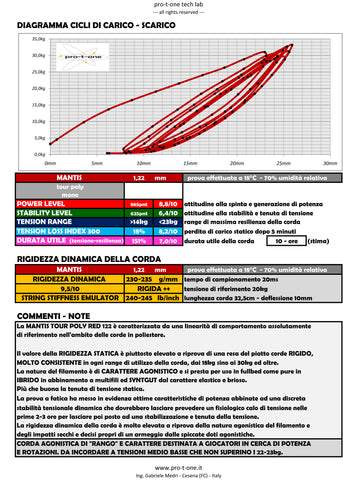
This time, engineer Medri from Pro-t-one analyzes for us Mantis' top monofilament, the red Tour Poly 1.22 mm, as he defines it:
"A competitive string "of rank" with character, intended for players looking for power and spin."
Below are the data sheets and general evaluations of the test:
The MANTIS TOUR POLY RED 122 is characterized by a linearity of behavior that is absolutely a benchmark in polyester strings. The STATIC STIFFNESS value is quite high, demonstrating a RIGID, VERY CONSISTENT stringbed performance across every range of string use, from 18kg up to 30kg and beyond. The filament's nature is COMPETITIVE and is suitable for fullbed use as well as HYBRID use in combination with multifilaments and SYNTGUTs with an elastic and lively character. The static tension retention is more than good. The fatigue test highlighted excellent power characteristics combined with decent dynamic tension stability, which should predict a physiological tension drop in the first 2-3 hours, followed by stabilization and tension retention. The dynamic stiffness of the string is very high, demonstrating the competitive nature of the filament and the crisp and decisive impacts typical of a string setup with strong competitive qualities.

Dyreex Black Sense String Review March 7, 2016 17:58
Another string put through its paces by Ing. Medri, the Black Sense by Dyreex is a multifilament string with excellent performance and comfort, featuring a polyester core and a nylon shell with high molecular density for increased durability. This combination allows for both power and comfort.
Black string, 1.30mm gauge
Below are the mechanical test tables:


Ing. Medri's commentary on the test:
"The Dyreex Black Sense 1.30 stands out as a high-quality multifilament string.Good power values are accompanied by an absolute benchmark in tension stability.
Excellent elastic response peaks coupled with a medium resilience range for a multi string. The correlation of these data describes an elastic string that is nevertheless very lively, crisp, reactive, competitive, and 'controlled' for a filament of this type.
The recommended tension range is quite variable depending on the results we want to obtain from our string bed, knowing that as tension increases, we will observe an 'incremental' stiffening that can change the response from soft to nervous and aggressive.
Dynamic stiffness is limited, and impact shock is very limited.
Comfort, provided that average operating tensions are maintained, is also guaranteed for those who love the feel, but tensions not exceeding 22-23kg are recommended to fully enjoy the characteristics of the filament, which is designed for versatility to be its strength.
Dynamic durability is excellent, and the string can remain strung until its mechanical breakage.
The stiffening of the filament is progressive but not very marked, accompanied by a loss of tension that concentrates in the first hours of play and then stabilizes and remains constant."
Some considerations on ropes and their real value February 26, 2016 07:43
 Taking advantage of the Christmas break, I scrolled through the USRSA rankings of the best-selling mono/co-polyester strings currently on the market.
I wondered if the reasons behind the preference for one model over another were objective (better materials, price, performance) or related to other factors. These factors could be: availability in stores, trends, top players who claim to use them...
Thanks to the support of tools from Eng. Medri of Pro-T-One, I viewed the responses that the most popular strings of the moment give when subjected to in-depth and objective laboratory tests.
The results were surprising in many cases...
Since the laboratory data didn't explain to me why an expensive string with average performance had more success than another model, which performed better and was less expensive, I thought that most consumers didn't have the sensitivity or technique to "feel" the different performances of the various stringings.
I then took as a reference the field tests of the largest online tennis store, TennisWarehouse USA. The TW testing team is made up of players who very well represent the "average" tennis player, i.e., the one who "moves" the most numbers in the sales rankings of tennis strings.
Even the published field test results, almost always in line with laboratory tests, did not give me the answer I was looking for. This was Engineer Medri's answer to my question:
"It seems clear to me that the solution to our doubts is very evident... The market offers a series of products without any certification, and the player's perception is preferentially and exclusively influenced by certain sensory and emotional elements. The player sponsoring the product, the color, and the brand are essential elements for the product's placement on the market, and partially but significantly, the opinions of certain "opinion leaders" who continuously and persistently move across forums and social media influence all of this.
What I want to say is that, first of all, there is a lack of a shared basis for judgment and a standard of comparison, partly due to major brands doing nothing in this direction, although my hope over time is to work to create a critical awareness in this regard.
Another element is that no brand offers serious and repeatable certification or evaluation tests to use for advertising and selling the product. A label with test results on the packaging wouldn't be a bad idea!"
Absolutely in line with this thinking, we decided to publish the laboratory test sheets of our strings, so that there can be objective data to motivate the choice of such an important product for our sport.
We hope that other companies will follow our example.
In the meantime, you can read the tests of the following strings:
Happy tennis!
Dyreex Black Edge Whirl String Test February 22, 2016 05:23
This time it's the turn of the Dyreex Black Edge Whirl to undergo mechanical testing by Eng. Gabriele Medri.
In this case, a twisted string with a gauge of 1.27, also available in 1.25mm and 1.30mm gauges.
A string created for spin and baseline pressure lovers, with very good tension retention.
Below is Eng. Medri's test with his conclusions:
The DYREEX BLACK EDGE TWIRL 1.27mm belongs to that generation of shaped, twisted strings aimed at all players who want to benefit from the increased elasticity provided by the twisted string. In this case, the string still maintains a particularly high consistency and stiffness, promising very taut stringbeds. Very powerful, dedicated to spin due to the undisputed "snap-back" action of the new string and certainly also after break-in due to its helical geometry. Tension stability is decent, although an appreciable drop in tension is to be expected after the first 2 hours of play, which might suggest an initial pre-stretch of 1-1.5% resulting in a tension drop of 1-1.5kg. Good static tension retention confirms the quality of the material. Durability is normal, which, like all monofilaments with distinctly competitive and performance characteristics, is around 9 hours of play with a marked but not radical stiffening.
A STRING WITH A COMPETITIVE AND "AGGRESSIVE" SPIRIT. DEDICATED TO THOSE WHO PREFER SEEKING SPIN AND UNRELENTING BASELINE PRESSURE.


Mantis Pro 310 II Racquet Diagnostic Test February 6, 2016 23:02
Today, thanks to the fantastic "Raquet Lab" by engineer Gabriele Medri, we bring you the test of the Pro 310, which identifies this racket as a high-level all-rounder. The Mantis Pro 310 does not have a strong propensity for a single quality, but rather a medium-high level in all the various aspects that characterize a racket: power, spin aptitude, stability, maneuverability, control, comfort, and arm protection, all rated between 7 and 7.5. A racket that allows you to do everything well.
You can find a complete review on TennisTaste by Fabio Ferro: http://tennistaste.com/mantis-pro-310-ii


Dyreex Black Burst 1.20 mm String Review January 17, 2016 20:06
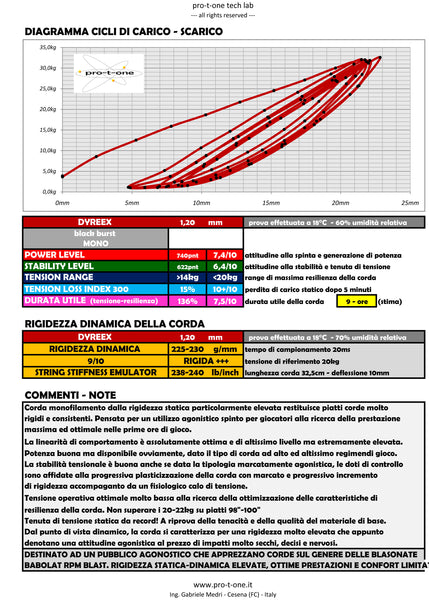
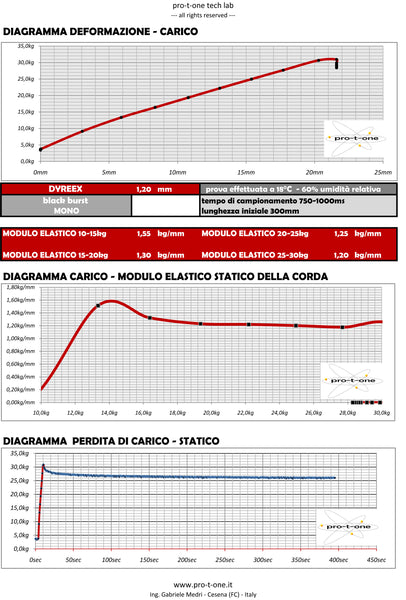
 We continue the series of posts regarding the pro-t-one tech labs tests; after the test for the Dyreex Black Edge, today it is the turn of Dyreex Black Burst 1.20mm.
String intended for competitive players who appreciate strings like the renowned Babolat RPM Blast. High static-dynamic stiffness, excellent performance, and limited comfort.
Monofilament string with particularly high static stiffness, resulting in very stiff and consistent string beds. Designed for aggressive competitive use by players looking for maximum and optimal performance in the first hours of play.
The linearity of behavior is absolutely excellent and of the highest level but extremely high. Good power, but obviously available, given the type of string, at high and very high playing speeds. Tension stability is good, although given the markedly competitive nature, control qualities are entrusted to the progressive plasticization of the string with a marked and progressive increase in stiffness accompanied by a physiological drop in tension. Optimal operating tension is very low in search of optimizing the resilience characteristics of the string. Do not exceed 20-22kg on 98"-100" string beds.
Record-breaking static tension retention, proving the tenacity and quality of the base material. From a dynamic point of view, the string is characterized by very high stiffness, which indeed denotes a competitive attitude at the cost of very dry, decisive, and nervous impacts.
Dyreex Black Edge 1.25mm String Test January 8, 2016 06:51
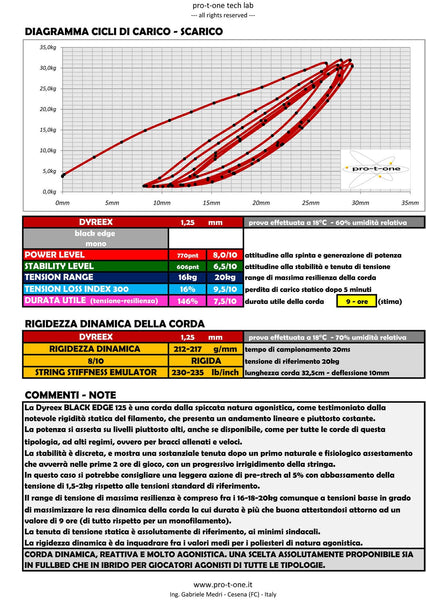
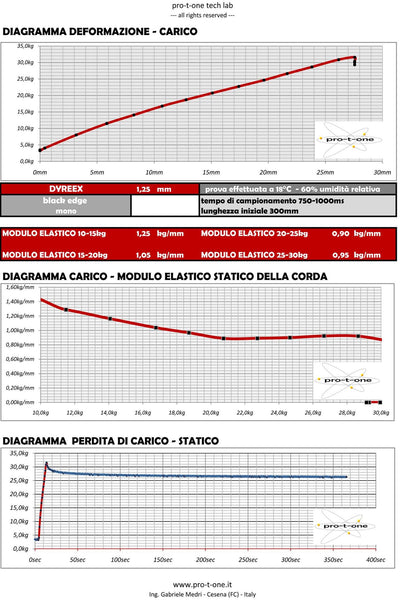
 Here are the test results from engineer Gabriele Medri, of pro-t-one tech labs, on the Dyreex BLACK EDGE 1.25mm string:
A dynamic, responsive, and highly competitive string. An absolutely suitable choice for competitive players of all types, both in fullbed and hybrid setups.
The Dyreex BLACK EDGE 125 is a string with a strong competitive nature, as evidenced by the considerable static stiffness of the filament, which shows a linear and rather constant trend. Power levels are quite high, although, like all strings of this type, it is available at high speeds, meaning for trained and fast arms. Stability is decent, and it shows substantial hold after an initial natural and physiological settling that will occur in the first 2 hours of play, with a progressive stiffening of the string. In this case, a slight 5% pre-stretch action with a tension reduction of 1.5-2kg compared to standard reference tensions could be recommended.
The maximum resilience tension range is between 16-18-20kg, however, at low tensions capable of maximizing the dynamic performance of the string, whose durability is more than good, settling around 9 hours (very respectable for a monofilament). Static tension retention is absolutely referential, at the bare minimum. Dynamic stiffness falls within the average values for competitive polyesters.
A good string, according to the rankings on stringforum.net, at a very attractive price of €6.90 for the reel and €68.00 for the coil, available in 1.25mm and 1.30mm gauges.
Complete test results
Quad-Core technology ensures 6% more ball speed and greater stability December 11, 2015 04:40
Test Procedure
- The rackets were used by the same players, under the same conditions.
- The rackets were strung with the same polyester string at 50 pounds.
- The frames compared have the same shape and dimensions (Formula vs. Pure Drive), weighing 300 grams and with a 100-inch stringbed, 16/19 string pattern.
- The traditional hollow-core racket has high stiffness RA 70, the Donnay Quad-Core has medium-low stiffness RA 60.
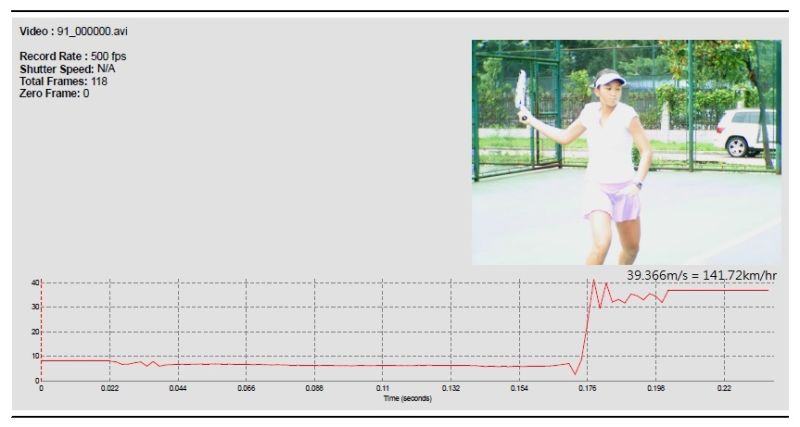
- The test was conducted by measuring a series of 30 shots executed during matches.
Test Results
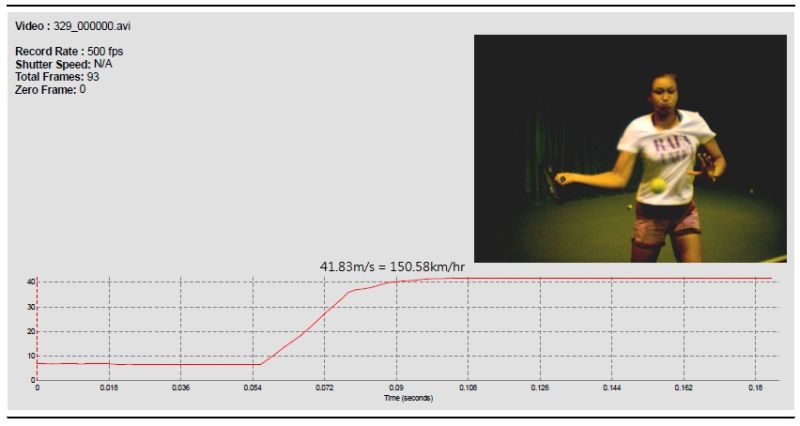
- The average shot speed of the traditional (hollow) racket was 142 km/h, the average shot speed of the Donnay Quad-Core was 150 km/h.
- The athletes' sensation was that the rackets with Quad-Core technology offered significantly superior stability.
Test Conclusion
Quad-Core rackets provide greater control and 6% more ball speed on shots, which translates, for example, to 10 miles per hour more on serve. The Quad-Core racket is found to be much more comfortable and stable.
Hollow Core (Pure Drive)
Quad-Core (Formula)